

FEH and extreme cold climates-any issues?


Imported from Detroit
Joined: Apr 2009
Posts: 1,051
From: Michigan
 Re: FEH and extreme cold climates-any issues?
The FEH 4WD feature is programmed to engage the rear axle
when “slip” is detected between the axles. Unless someone has
downloaded the software and decompiled it so that they can
read the criteria, we are only guessing.
Using the scangauge to infer how it operates is a good idea (and
playing “headsup ball”), but whatever we determine will remain
an educated guess.
when “slip” is detected between the axles. Unless someone has
downloaded the software and decompiled it so that they can
read the criteria, we are only guessing.
Using the scangauge to infer how it operates is a good idea (and
playing “headsup ball”), but whatever we determine will remain
an educated guess.
I believe that you have a workshop manual, look up the 4WD system and read what the description states.
Imported from Detroit
Joined: Apr 2009
Posts: 1,051
From: Michigan
Re: FEH and extreme cold climates-any issues?
Bill, the Ford advertising leads one to believe that the AWD is used for other than slippage, to increase performance. I believe their web site used a highway turn as an example. That is the reason they call it "intelligent" AWD. They don't come out and SAY that it is proactive, but the situations they describe indicate that the system is not like other vehicles, which only engages when rear wheel slippage occurs. It has other uses.
For myself, I know that I did not like the FWD and did like the AWD. They performed significantly different on my test drives.
For myself, I know that I did not like the FWD and did like the AWD. They performed significantly different on my test drives.
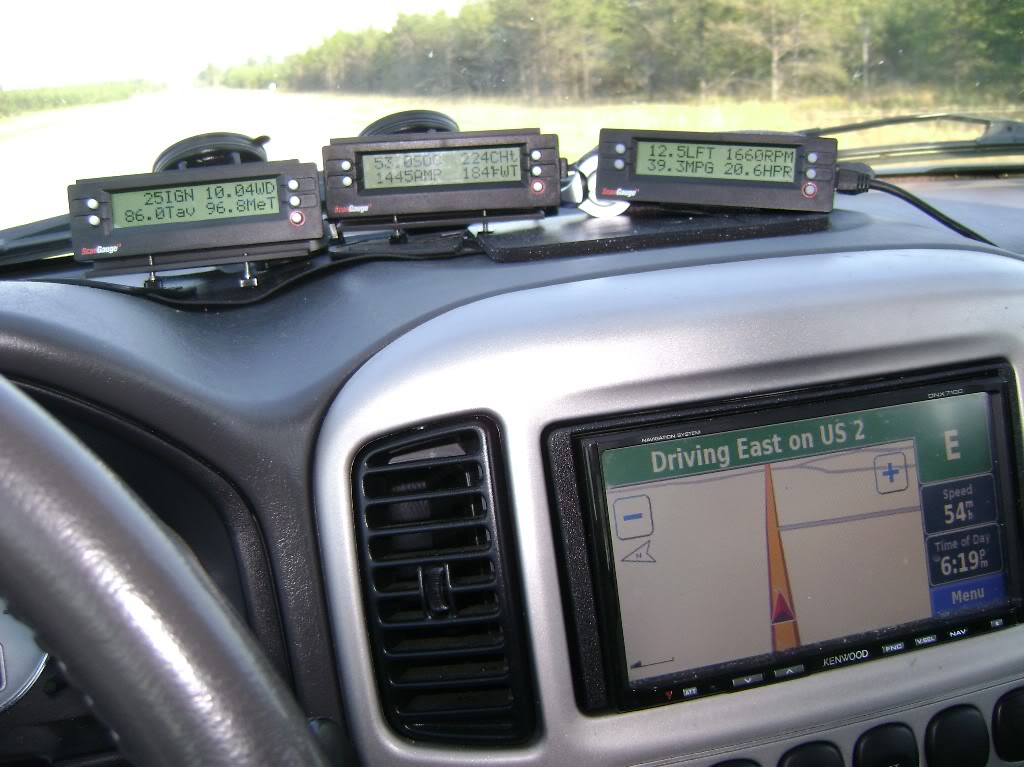
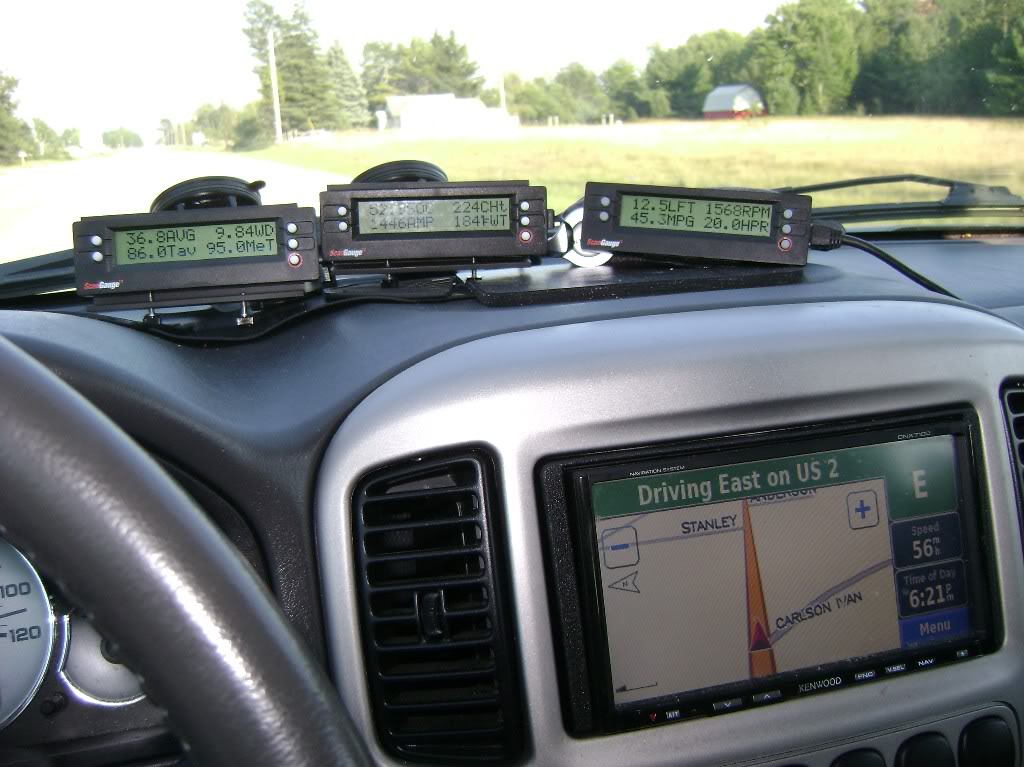
If your refering to that driving condition slectable moving graphic for a AWD Fusion? I've tried to duplicate that with my FE but at a constant speed, I see no rear torque! The description for the Fusion AWD operation in its workshop manual is exactly the same as the description of operation of the 4WD system in a FE/FEH workshop manual.
Under normal driving conditions, I don't see the need for 4WD. Where's the need for 4WD "every" time you leave from a dead stop, no matter what the driving conditions are? Do you need better handling to drive straight? Your losing 2-4MPG too!
I wondering when I get that TSB installed which reprograms the 4WD module, what if anything will change?
Last edited by wptski; Sep 28, 2009 at 04:58 PM.


Ridiculously Active Enthusiast
Joined: Jan 2009
Posts: 863
Re: FEH and extreme cold climates-any issues?
C’mon guys… don’t start playing gpsman1 on me…
I put quotes around the word slip in my post for a reason. The programming is set up to Engage AWD when some kind of differential rotational rate is detected between the front & rear axles…
Reference 2006 Escape Workshop Manual, Pg308-07A-1:
“If wheel slip between the front and rear wheels is detected, or if the vehicle is under heavy acceleration (high throttle position), the 4WD system increases torque to the rear wheels to prevent or control wheel slip.”
I put quotes around the word slip in my post for a reason. The programming is set up to Engage AWD when some kind of differential rotational rate is detected between the front & rear axles…
Reference 2006 Escape Workshop Manual, Pg308-07A-1:
“If wheel slip between the front and rear wheels is detected, or if the vehicle is under heavy acceleration (high throttle position), the 4WD system increases torque to the rear wheels to prevent or control wheel slip.”
Imported from Detroit
Joined: Apr 2009
Posts: 1,051
From: Michigan
Re: FEH and extreme cold climates-any issues?
C’mon guys… don’t start playing gpsman1 on me…
I put quotes around the word slip in my post for a reason. The programming is set up to Engage AWD when some kind of differential rotational rate is detected between the front & rear axles…
Reference 2006 Escape Workshop Manual, Pg308-07A-1:
“If wheel slip between the front and rear wheels is detected, or if the vehicle is under heavy acceleration (high throttle position), the 4WD system increases torque to the rear wheels to prevent or control wheel slip.”
I put quotes around the word slip in my post for a reason. The programming is set up to Engage AWD when some kind of differential rotational rate is detected between the front & rear axles…
Reference 2006 Escape Workshop Manual, Pg308-07A-1:
“If wheel slip between the front and rear wheels is detected, or if the vehicle is under heavy acceleration (high throttle position), the 4WD system increases torque to the rear wheels to prevent or control wheel slip.”
I can use a moderate amount of throttle or heavy and still see no more than 30% rear wheel torque, so I don't know where they get that part about the heavy acceleration from at all.
Principles of Operation
The vehicle is equipped with an intelligent 4-wheel drive (4WD) system that is always active and requires no driver input. The system has no mode select switch. The system combines transparent all-surface operation with highly capable 4WD, and is capable of handling all road conditions, including street and highway driving as well as off-road and winter driving.
The 4WD system continuously monitors vehicle conditions and automatically adjusts the torque distribution between the front and rear wheels. During normal operation, most of the torque is sent to the front wheels. If wheel slip between the front and rear wheels is detected, or if the vehicle is under heavy acceleration (high throttle position), the 4WD system increases torque to the rear wheels to prevent or control wheel slip.
The 4WD control module varies the torque sent to the rear wheels by varying a pulse-width modulated current to the clutch in the rear axle. The 4WD control module also provides the brake system with its current clutch duty cycle and whether or not the brake system may take command of the clutch duty cycle.

Ridiculously Active Enthusiast
Joined: Sep 2006
Posts: 1,678
From: Beautiful Pacific NW
Re: FEH and extreme cold climates-any issues?
Ultimate answer, no.
My daughter's 2000 F/awd Chrysler T&C literally destroyed the PTO ring and pinion within about 50 miles of driving with tires/wheels on the front that were of slightly different, ~3%, circumference. The T&C uses a VC, Viscous Coupling(clutch) in series with the rear drive line to automatically couple engine torque to the rear if there is disparate, differing, rotation rates at the front vs the rear.
I had upgraded the wheels/tires to +1 wheel diameter and they installed the OEM wheels on only the front since they were headed off skiing and only had tire chain adapters for the original OEM wheels.
They didn't get 50 miles from home, never reaching the snow/ice "line", before most of the the PTO's gear teeth went TU.
So it will be VERY hard to ever convince me that even a partial coupling of engine torque to the rear with the front drive remaining fully engaged will not result in a failure, probably sooner than later.
So no, I do not know how the FEH F/awd control firmware is written/specified, but I do know the basic rules for what it cannot, should NEVER do.
1. It can NEVER be engaged when the brakes are applied or VSC is active.
2. It should NEVER be engaged in a tight radios turn or a low speed accelerating turn.
3. It should NEVER be continuously engaged on a highly tractive surface.
So, what's left..??
A. Engagement on a KNOWN low tractive surface, say for some brief period, 20-30 seconds, after wheelspin/slip is detected.
B. Under HARD acceleration should the engine HP/torque to the front, FWD or F/awd, be of sufficient measure that a real threat of loss of traction due to the use of WOT operation.
This latter one, "B", might apply to the FEH with its STELLAR low speed torque, but probably not the FE itself.
My daughter's 2000 F/awd Chrysler T&C literally destroyed the PTO ring and pinion within about 50 miles of driving with tires/wheels on the front that were of slightly different, ~3%, circumference. The T&C uses a VC, Viscous Coupling(clutch) in series with the rear drive line to automatically couple engine torque to the rear if there is disparate, differing, rotation rates at the front vs the rear.
I had upgraded the wheels/tires to +1 wheel diameter and they installed the OEM wheels on only the front since they were headed off skiing and only had tire chain adapters for the original OEM wheels.
They didn't get 50 miles from home, never reaching the snow/ice "line", before most of the the PTO's gear teeth went TU.
So it will be VERY hard to ever convince me that even a partial coupling of engine torque to the rear with the front drive remaining fully engaged will not result in a failure, probably sooner than later.
So no, I do not know how the FEH F/awd control firmware is written/specified, but I do know the basic rules for what it cannot, should NEVER do.
1. It can NEVER be engaged when the brakes are applied or VSC is active.
2. It should NEVER be engaged in a tight radios turn or a low speed accelerating turn.
3. It should NEVER be continuously engaged on a highly tractive surface.
So, what's left..??
A. Engagement on a KNOWN low tractive surface, say for some brief period, 20-30 seconds, after wheelspin/slip is detected.
B. Under HARD acceleration should the engine HP/torque to the front, FWD or F/awd, be of sufficient measure that a real threat of loss of traction due to the use of WOT operation.
This latter one, "B", might apply to the FEH with its STELLAR low speed torque, but probably not the FE itself.
Last edited by wwest; Sep 28, 2009 at 09:36 PM.
Ridiculously Active Enthusiast
Joined: Sep 2006
Posts: 1,678
From: Beautiful Pacific NW
Re: FEH and extreme cold climates-any issues?
That's incorrect! It doesn't need slippage to enable 4WD. A sentence used in online descriptions and in the workshop manual states: Under normal driving conditions "most" of the torque is sent to the front wheels and if slippage is detected increased torque is sent to the rear wheels. The SG-II shows that which verified my testing with a scope.
I believe that you have a workshop manual, look up the 4WD system and read what the description states.
I believe that you have a workshop manual, look up the 4WD system and read what the description states.
Where is the "most" line to be drawn..??
"..if slippage is detected...increased torque is sent..."
Increased from what...?? 00.001 %..??
Or maybe just the "latent", unavoidable, coupling coefficient of the dual clutch with zero voltage applied.
Marketing's JOB is to put absolutely the best "spin" on these statements without actually lying.
We all already know that the early FE/FEH F/awd versions were prone to overheating and had an indicator warning of such. With an indication of over-heating the driver was advised to pull over to the side of the road and allow the system to cool down. At least one marque using this same F/awd system has added additional cooling for the PTO.
What do you suppose Ford has done, other than use the firmware to derate the rear drive capability, to alleviate the overheating issue for the later model years of the FEH...?
Last edited by wwest; Sep 28, 2009 at 09:31 PM.
Ridiculously Active Enthusiast
Joined: Jan 2009
Posts: 863
Re: FEH and extreme cold climates-any issues?
wptski: So what was the point of your posting the larger paragraphs? It doesn’t change the section I quoted, nor the import of the use of the word slip as I employed it.
PS As usual wwest continues to demonstrate why he should remain on ones ignore list.
PS As usual wwest continues to demonstrate why he should remain on ones ignore list.
Last edited by Bill Winney; Sep 29, 2009 at 07:41 AM.
Imported from Detroit
Joined: Apr 2009
Posts: 1,051
From: Michigan
Re: FEH and extreme cold climates-any issues?
Because you left out the most important part! The sentence that states that 4WD isn't enabled only when slippage is detected. Under city driving, stop/go, that's 4WD ON/OFF every time.




